
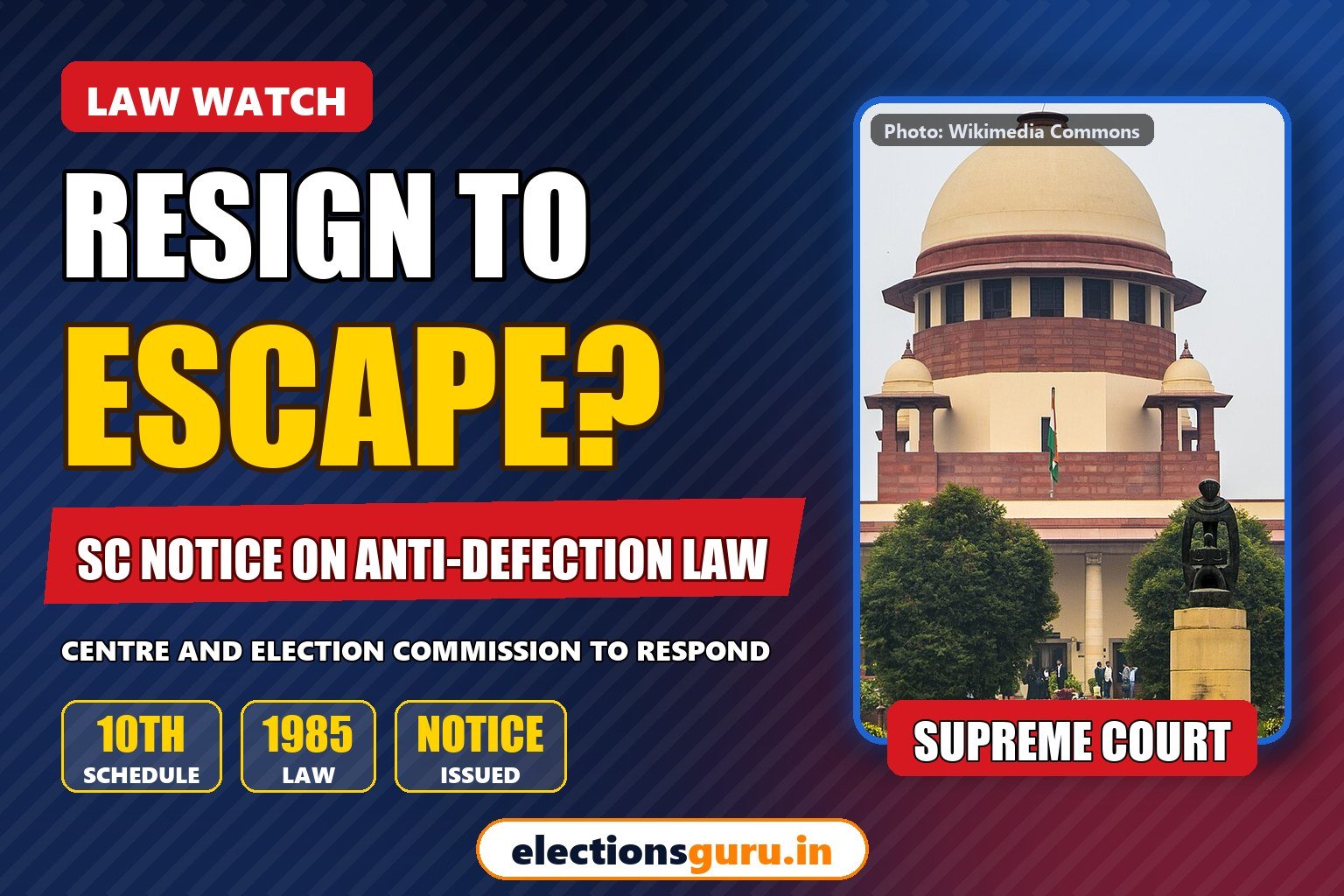
The Supreme Court has issued notice to the Centre and the Election Commission on a public interest litigation seeking major changes to the anti-defection law. The petition argues that MLAs and MPs resign to avoid disqualification proceedings.
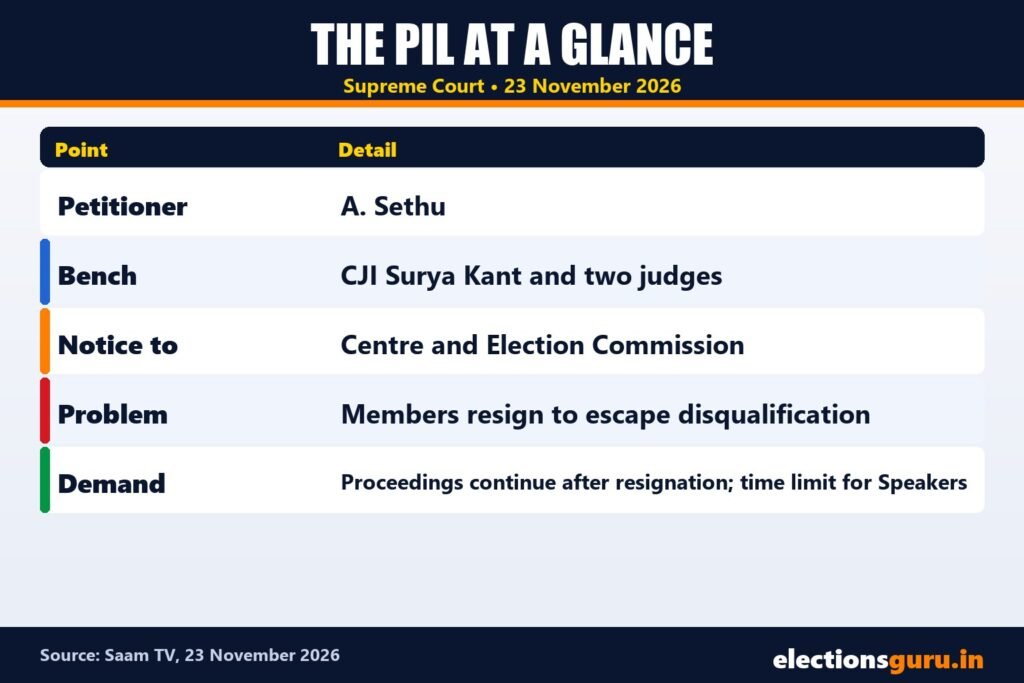
The Petition at a Glance
| Detail | Information |
|---|---|
| Petitioner | A. Sethu |
| Bench | Headed by CJI Surya Kant |
| Respondents | Union of India, Election Commission |
| Date | 23 November 2026 |
What the PIL Seeks
- Disqualification proceedings should not end automatically when a member resigns
- Speakers and Chairpersons should decide disqualification petitions within a fixed time
How the Law Works Today
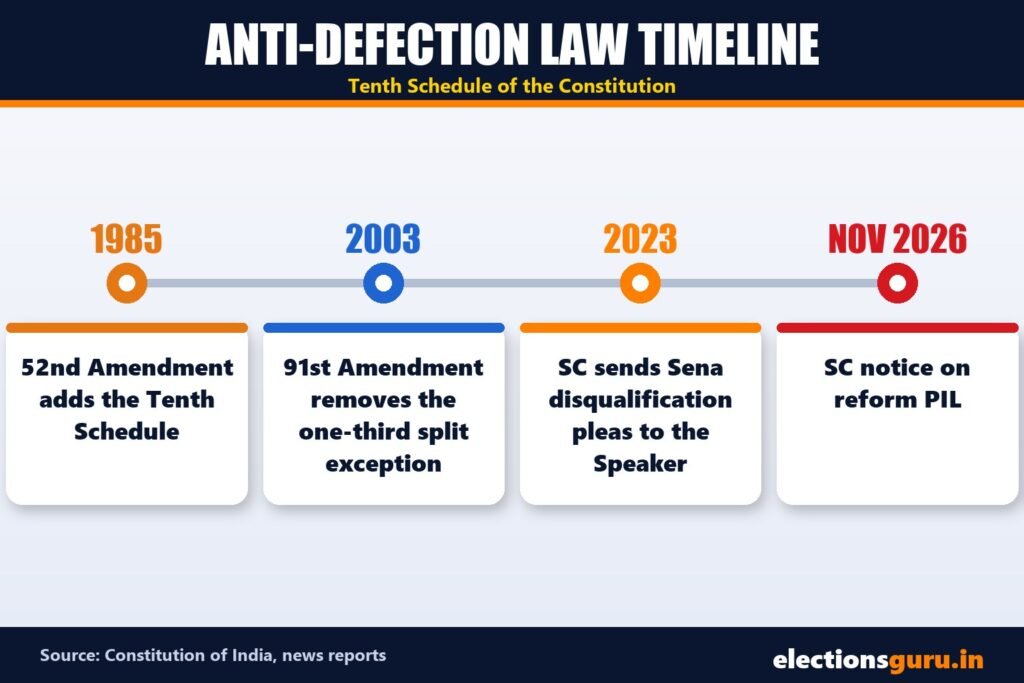
The Tenth Schedule, added by the 52nd Amendment in 1985, lets the presiding officer disqualify members who voluntarily give up party membership or defy the whip. The 91st Amendment in 2003 removed the one-third “split” exception; a merger now needs two-thirds of the legislature party.
Also Read: Shinde’s Surat Night Explained: Pistol Claim, “Ram Naam Satya” Row
Election Guru Analysis
Maharashtra has seen the law tested hard since 2022, from the Shiv Sena split to the NCP split. A ruling that sets deadlines for Speakers would change how such fights play out, but the Court has only issued notice so far.
Watch: Supreme Court Notice on Anti-Defection Law Video
For the detailed background, watch the full Election Guru video below.
Supreme Court Notice on Anti-Defection Law FAQ
What did the Supreme Court do?
It issued notice to the Centre and the Election Commission on a PIL seeking anti-defection law reforms.
What is the main issue in the PIL?
MLAs and MPs resigning to escape disqualification proceedings.
What does the petition ask for?
That proceedings continue even after resignation and that Speakers decide within a fixed time.
Which bench heard the case?
A bench headed by Chief Justice Surya Kant.
When was the anti-defection law introduced?
In 1985 through the 52nd Constitutional Amendment (Tenth Schedule).
What changed in 2003?
The 91st Amendment removed the one-third split exception; only mergers backed by two-thirds are protected.